
ClinSearch

ClinSearch
6035 Shallowford Rd. Suite #109
Chattanooga, TN 37421
Study Hotline
+1-423-347-6279
Main Office
+1-423-698-4584

About Us
ClinSearch is a multi-disciplinary clinical research site that brings many years of experience and leadership in the research community to the Chattanooga, Tennessee area. Our research site effectively combines strategic accelerated volunteer recruitment and retention with high-quality clinical trial conduct practices. Our approach is uncompromising – each study conducted at our site is carefully planned and executed according to protocol and regulations with superior quality.
ClinSearch was founded in 1990 and is led by Dr. Mark McKenzie, Medical Director.
Facilities
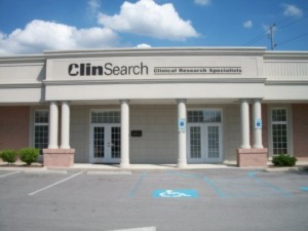
ClinSearch has a 5,000-square-foot dedicated research facility in Chattanooga, TN. Our building is conveniently located near three major medical centers and is only 2 miles from the Chattanooga Airport. ClinSearch is quickly accessible from all areas of town.
Facility Features
- Fully-alarmed, 24-hour monitored security system with selective pin access
- Dedicated monitoring rooms with high-speed Internet, copier, phone and fax
- 24-hour dedicated emergency contact phone
- Conference room with access to internet
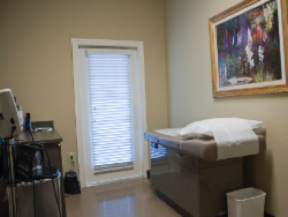
- Fully-equipped examination rooms
- Climate controlled and secured drug storage with limited key access
- Climate controlled and secure on-site records storage
- Dedicated coordinator offices
- Infusion Suite
Diagnostic/Clinic Equipment:
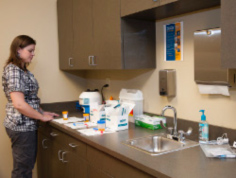
- State of the art CLIA waived laboratory
- On site emergency equipment including AED, oxygen, crash cart medications (IV fluids, steroids, epinephrine, ASA, inhalers)
- Ultra So-Lo freezer (-20° and -70°)
- Dry ice storage capabilities
- Locked refrigerator and freezer
- ECG – Mac 1200
- Scales – Tanita
- Data log tag 24/7 temperature monitoring system
- IV/Infusion Capabilities
- Welch Allyn Baumanameter blood pressure units
- Centrifuge & Refrigerated Centrifuge Incubator
ClinSearch is affiliated with a local diagnostic center with the following capabilities:
- Ultrasound
- Echocardiogram
- Endoscopy
- Ultra-fast CT
- MRI
- Pulmonary Function Testing
- PSG
- Liquid Nitrogen Storage
Online Data Management System
We utilize an online system to merge real time recruitment, trial progression and all study data. Our database includes over 12,000 people and is continuously growing.

Our Location

We conduct clinical research trials to advance health.
There are lots of reasons to participate in a medical study.
Browse and apply for a study today!